(720) 908-2957
 Locations
 Homework Center










It’s Tuesday morning. Again. Your son can’t find his math homework, the one he swears he finished. Your daughter’s backpack looks like it survived a natural disaster, and somewhere in that chaos is the permission slip due today. You’ve tried nagging, bribing, threatening. Nothing sticks.
Here’s what you need to know: Your child isn’t lazy. They’re not careless. Many students, especially those with executive function challenges, genuinely struggle with school organization. Their brains process information differently, and standard organizational advice doesn’t work.
The good news? Organization is a skill that can be taught. Here’s how to help your child get organized for school with systems designed for how their brain actually works.
1. Design the Environment (The “Launch Pad”)
Executive function challenges often stem from a lack of working memory: the ability to hold information in your mind while performing a task. When a child has to remember where their cleats, math folder, and lunchbox are every single morning, their cognitive battery drains before school even starts.
The solution is Environment Design. The goal is to reduce friction by keeping frequently needed items in consistent, visible locations.
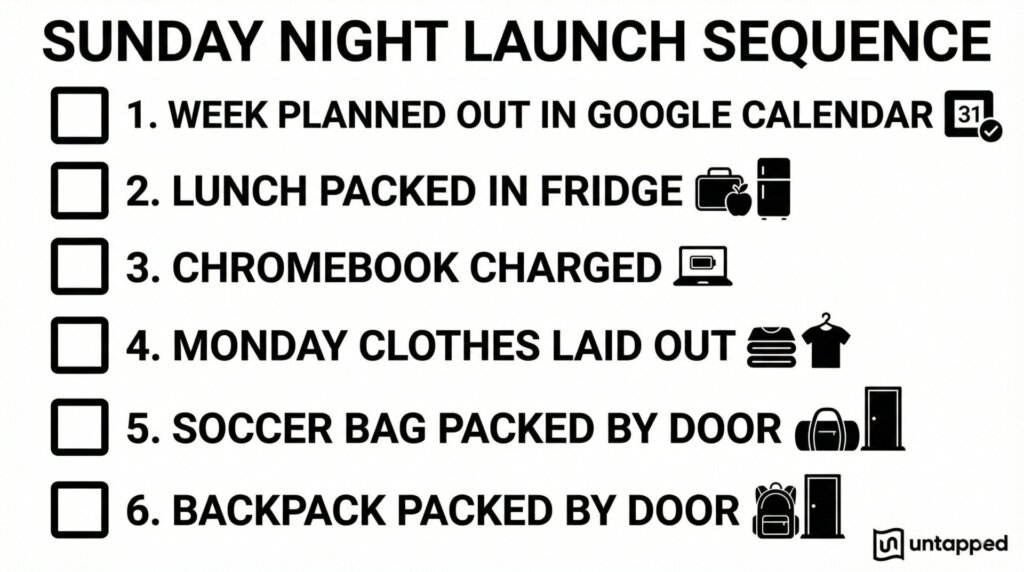
Create a “Launch Pad”: Designate a specific spot near the front door where the backpack, shoes, and coat always live. When everything has one home, your child doesn’t waste mental energy searching each morning.
Use Visual Cues: If they need their hockey bag on Tuesdays, place a sticky note on the door or backpack. Visual reminders work better than verbal nagging because they’re always there, quietly prompting without the emotional charge.
Reduce Clutter: A cluttered workspace equals a cluttered mind. Keep their homework station free of distractions with only the materials needed for the task at hand.
The Nightly Reset: Make backpack organization part of the evening routine, not morning chaos. Five minutes before bed checking tomorrow’s materials prevents frantic searches and helps your child start each day prepared.
2. Make Time Concrete (Visual Planners)
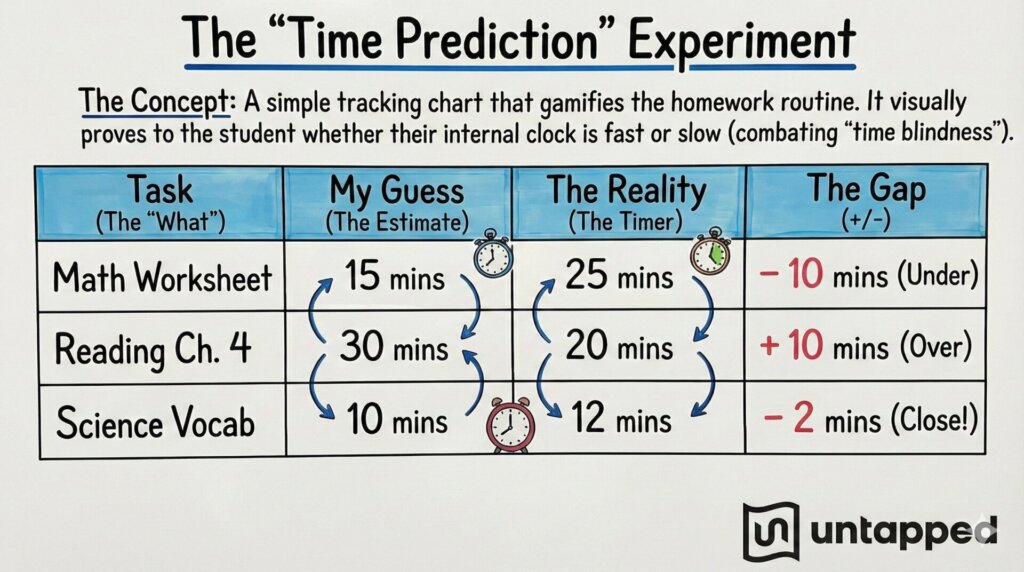
One of the most common struggles for students with executive function deficits is “time blindness”: the inability to sense time passing or estimate how long tasks take. Telling a child to “manage their time” is abstract. We need to make it concrete.
See the Week: Use a large wall calendar or whiteboard planner. Seeing the “landscape” of the week helps students anticipate heavy homework nights or extracurricular commitments. When Tuesday shows three assignments due, they can start one Sunday instead of being blindsided.
Time Blocking: Help your child divide their afternoon and evening into specific blocks of time for different activities. For example: 3:30-4:00 is snack time, 4:00-5:00 is homework, 5:00-6:00 is free time. When time has a designated purpose, students are less likely to waste it or feel overwhelmed.

Backward Planning: For big projects, teach your child to plan backward from the due date. If the science fair is Friday, what needs to be done Thursday? Wednesday? Walk through this process together until the thinking pattern becomes familiar.
Take Maya, a seventh-grader who consistently turned in projects late. Her mom introduced time blocking: 4:00-4:30 PM every day became “project time.” They blocked out research on Monday and Tuesday, outline on Wednesday, and draft on Thursday and Friday. For the first time, Maya finished three days early.
Time blocking transformed an overwhelming project into manageable daily chunks she could actually see and tackle.

3. Create Systems That Work With Their Brain
Once you’ve established where and when work happens, the next step is removing obstacles that derail focus. Small friction points like missing pencils or the wrong environment can completely shut down a struggling student before they even begin.
Stock a Homework Station: Keep everything within arm’s reach: pencils, erasers, paper, calculator, highlighters. When students must hunt for supplies mid-assignment, regaining momentum becomes nearly impossible. The fewer barriers between your child and getting started, the better.
Know Their Focus Style: Some need complete silence. Others focus better with background music or white noise. Pay attention to what actually helps your child concentrate, not what you think should work.
4. Externalize Memory (Checklists & Routines)
Working memory limitations mean your child genuinely can’t hold multi-step instructions in their head while executing them. The solution? Externalize those steps so they don’t have to remember.
Morning Routine Checklist: Create a visual list of everything that needs to happen before leaving for school. Get dressed, eat breakfast, brush teeth, pack lunch, grab your backpack. What seems obvious to you isn’t automatic for a brain with executive function challenges.
Homework Completion Checklist: Include checking the planner, gathering materials, completing assignments, packing finished work, and updating the planner. This prevents the “I did it but forgot to turn it in” frustrations.
Sunday Planning Ritual: Spend 15 minutes looking at the week ahead together. Check for upcoming tests, project deadlines, or schedule changes. This preview reduces “I didn’t know about it” surprises.
The Power of Routine: When organizational tasks happen at the same time each day with the same steps, they gradually require less conscious effort. The morning backpack check becomes automatic. The evening planner review becomes routine. Organization shifts from exhausting to effortless, but it takes consistency.
5. Build Time Awareness and Accountability
Estimate and Set Timers: Before starting homework, help your child estimate how long each assignment will take, then set a timer. This builds time awareness and prevents homework from consuming the entire evening.
Body Doubling: Sometimes just having another person quietly working nearby provides enough accountability to help a child stay on track. You’re not helping with homework; you’re just present.
Start Small: Don’t overhaul everything at once. Pick one routine (Lead Domino), maybe the nightly backpack reset, and establish that before adding more. Small, consistent changes build lasting habits for school organization.
Bringing It All Together
Helping your child get organized isn’t about fixing them; it’s about giving them the tools to navigate a world that demands high executive function skills. It requires patience, trial and error, and a willingness to adjust strategies when they stop working.
Remember, progress is not a straight line. There will be messy backpacks and forgotten lunches again. But with consistent routines and supportive scaffolding, your child can build the independence they need to thrive.
Need more support? Sometimes, parents are too close to the situation to be the best coach for their child. If you are looking for a partner to help your student build these essential organizational skills, Untapped Learning specializes in executive function coaching for students.
We help students build personalized strategies, sustainable habits, and the self-advocacy skills to succeed in school and beyond.